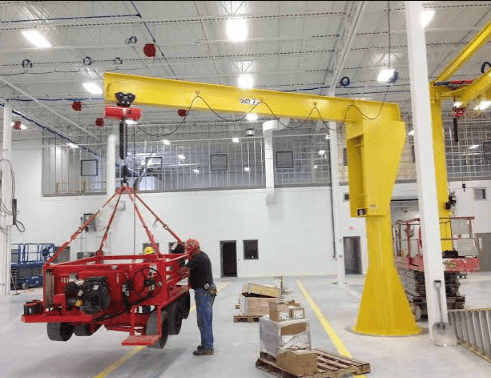
Cranes perform lifting operations in construction, shipping, manufacturing, and infrastructure projects where reliable movement is essential. Their rotating structures must support substantial loads while allowing operators to position booms and lifting equipment accurately. One of the key components responsible for this movement is the slewing ring.
A crane slewing ring connects the rotating upper structure to the supporting base. It enables controlled rotation while transferring forces generated by the machine’s weight, suspended loads, and operating movements. Because cranes work under changing conditions, selecting an appropriate bearing requires careful attention to the complete mechanical system.
Standard components may suit many applications, but some crane designs have specific requirements involving dimensions, load capacity, gear configuration, installation space, or operating environment. In these situations, a customized solution may help align the bearing design with the machine’s engineering needs.
The Role of Slewing Rings in Crane Design
A slewing ring is a large-diameter bearing designed to support relative rotation between connected structures. In a crane, it typically sits between the stationary understructure and the rotating upper assembly.
The bearing allows the upper structure to turn while transferring forces through its rolling elements, raceways, rings, and mounting connections. Depending on the design, it may also incorporate gear teeth that engage with a drive pinion.
The slewing ring must work as part of an integrated system. Its performance is influenced by the supporting structure, fasteners, drive mechanism, lubrication, sealing, and installation accuracy.
Selecting a bearing without considering these related elements can lead to compatibility problems or reduced service life. Engineers should therefore evaluate the complete rotational assembly rather than treating the bearing as an isolated component.
Why Crane Applications May Require Customization
Different Load Requirements
Cranes are available in many configurations, from compact construction machines to large lifting systems. Their slewing bearings experience different combinations of axial loads, radial loads, and overturning moments.
These forces depend on factors such as lifting capacity, boom position, load distance, machine geometry, and operating conditions. A customized bearing specification can help address requirements that are not adequately covered by an existing standard design.
Engineering calculations should establish the relevant load cases before a bearing is selected. The design must also account for applicable safety factors and the requirements of the crane manufacturer.
Space and Mounting Restrictions
The available installation space can influence bearing diameter, overall height, mounting-hole arrangement, and gear placement. Replacement projects may have additional restrictions because the existing crane structure cannot easily be modified.
Customization may help address these constraints, provided the proposed design remains compatible with the machine’s structural and operating requirements.
Mounting dimensions should be verified carefully. A component that matches the external dimensions of the original bearing may still differ in load capacity, internal geometry, or gear characteristics.
Drive System Compatibility
A crane’s slewing mechanism commonly uses a motor, gearbox, and pinion to produce rotation. The bearing’s gear configuration must be compatible with this arrangement.
Gear dimensions, tooth geometry, pinion position, and required rotational performance should be checked during the design process. Correct engagement is important for reducing uneven contact, noise, and premature wear.
Operating Environment
Cranes may operate outdoors, near coastal environments, on construction sites, or in industrial facilities. Exposure to moisture, dust, temperature changes, and corrosive substances can influence material selection, sealing, and lubrication requirements.
A customized specification can consider these conditions alongside the mechanical loads, helping the complete assembly meet its intended operating requirements.
Important Design Considerations
Bearing Type and Internal Configuration
Slewing rings may use different rolling-element arrangements, including ball bearings and roller bearings. Each design offers different performance characteristics, and suitability depends on the application.
The selected configuration should be evaluated against the expected load combinations, available space, required stiffness, rotational behavior, and service-life targets.
No bearing type should be chosen solely because it is commonly used in another crane. The actual operating requirements must guide the decision.
Material and Manufacturing Quality
Bearing performance depends on the materials and manufacturing processes used for the rings, raceways, rolling elements, and gear teeth.
Dimensional accuracy, heat treatment, surface condition, and inspection procedures can influence the component’s ability to meet its specifications. Buyers should request relevant technical documentation and clarify the quality requirements for their application.
For demanding lifting equipment, traceability and appropriate inspection records may be important parts of the procurement process.
Gear Geometry
Where the slewing ring incorporates a gear, its geometry must match the pinion and drive arrangement. The design should provide suitable engagement and allow the required rotational movement.
Incorrect alignment can concentrate loads on a limited section of the teeth, increasing wear and potentially affecting machine performance. Installation tolerances and adjustment procedures should follow the manufacturer’s documentation.
Lubrication and Sealing
Lubrication helps reduce friction and wear at rolling contacts and gear interfaces. The appropriate lubricant and application schedule depend on the bearing design, operating conditions, and manufacturer recommendations.
Seals help protect internal components from moisture and contaminants. Their design and condition are particularly important for cranes working in dusty or wet environments.
Maintenance access should also be considered during the design stage so that inspections and lubrication can be carried out safely.
Applications Across Different Crane Categories
Tower Cranes
Tower cranes are used on construction projects where materials must be lifted and positioned across a large working area. Their rotational systems must accommodate changing boom positions and lifting conditions.
Bearing selection should reflect the crane’s specified loads, structural arrangement, operating cycles, and installation requirements. Correct mounting and inspection procedures remain essential throughout the equipment’s service life.
Mobile Cranes
Mobile cranes combine lifting capability with transport between job sites. Their operating conditions may vary considerably depending on terrain, setup, boom configuration, and the loads being handled.
The slewing assembly must be suitable for the manufacturer’s defined operating conditions. Maintenance teams should follow the equipment documentation when inspecting or replacing its rotational components.
Port and Industrial Cranes
Port cranes and industrial lifting systems may operate frequently in environments involving moisture, airborne contaminants, or demanding duty cycles.
For these applications, buyers should evaluate mechanical load capacity alongside corrosion protection, sealing, lubrication, and maintenance requirements. The suitability of the bearing should be verified against the crane’s engineering specifications.
How to Select a Custom Crane Slewing Ring
A structured selection process can reduce uncertainty and help prevent expensive compatibility errors.
First, collect the crane’s technical information, including equipment model, original bearing identification, mounting drawings, and available dimensional measurements. Where possible, include the original manufacturer’s documentation.
Next, establish the relevant axial loads, radial loads, overturning moments, rotational speed, duty cycle, and environmental conditions. These inputs should be reviewed by qualified engineering personnel.
Then verify the mounting interface, fastener arrangement, gear dimensions, and drive compatibility. Any proposed change from the original configuration should be assessed for its effect on the crane’s structural and operational performance.
When evaluating LYHGB Bearing customized crane slewing ring buyers should confirm the available customization options, technical specifications, manufacturing requirements, and documentation before proceeding. Product suitability should be established through engineering verification rather than assumptions based on appearance or general product descriptions.
It is also useful to clarify delivery schedules, inspection requirements, and technical communication arrangements. These factors can influence replacement planning and equipment downtime.
Installation and Maintenance for Long-Term Reliability
Correct installation is essential for achieving the intended bearing performance. Before mounting, technicians should inspect the supporting surfaces and ensure that they meet the specified flatness and stiffness requirements.
The bearing must be handled carefully to avoid damage or contamination. Fasteners should meet the specified grade, dimensions, and tightening requirements, with the recommended sequence followed during assembly.
After installation, technicians should verify the gear and pinion engagement according to the manufacturer’s instructions. Commissioning checks should be completed before the crane returns to normal service.
Ongoing maintenance should include lubrication, seal inspections, and monitoring for abnormal noise, vibration, temperature changes, or rotational resistance. Any unusual condition should be investigated using the appropriate inspection procedures.
Maintenance records can help teams identify recurring problems and schedule servicing more effectively. For crane systems, all inspection and replacement activities must also follow the relevant manufacturer guidance and applicable safety requirements.
Frequently Asked Questions
1. Why might a crane require a customized slewing ring?
Customization may be necessary when the crane has specific load requirements, unusual mounting dimensions, particular gear arrangements, or environmental demands that are not adequately addressed by a standard configuration.
2. What information is needed to order a replacement crane slewing ring?
Useful information includes the crane model, original bearing number, mounting drawings, dimensions, load requirements, gear specifications, and operating environment. The final selection should be verified against the equipment’s technical requirements.
3. How can the service life of a crane slewing ring be supported?
Follow the manufacturer’s installation and lubrication instructions, inspect seals and mounting connections, monitor unusual operating behavior, and maintain accurate service records. Inspections should follow the equipment’s maintenance schedule and applicable safety requirements.
Conclusion
A crane slewing ring is a critical component that enables rotation while transferring loads between the upper structure and the supporting base. Its reliability depends on the compatibility of the bearing design, mounting arrangement, gear system, and operating environment.
Customization can help address specific engineering requirements, but it should be supported by accurate load information, verified dimensions, and appropriate technical documentation. Through careful supplier evaluation, correct installation, and consistent maintenance, crane operators and equipment manufacturers can support dependable rotational performance and more effective equipment management.